



Understanding why delicate periocular skin requires targeted pro-ageing care.
The skin surrounding our eyes is one of the most expressive, delicate, and vulnerable regions of the face. It is often the very first area where fatigue, surface dehydration, and the natural passage of time become visible. If you have ever applied your standard facial moisturiser or generic serum around your eyes and felt it was not quite meeting the mark, you are not alone.
When building a thoughtful pro-ageing routine, incorporating a targeted active like Tetrapeptide-1 for skin offers an evidence-based approach designed specifically for the unique demands of the periocular contour. In this deep dive, we unpack the science of eye-area peptides and other actives targeting the eye area, explore what Tetrapeptide-1 does for your skin’s appearance, and explain how a curated eye mask fits into your daily routine.
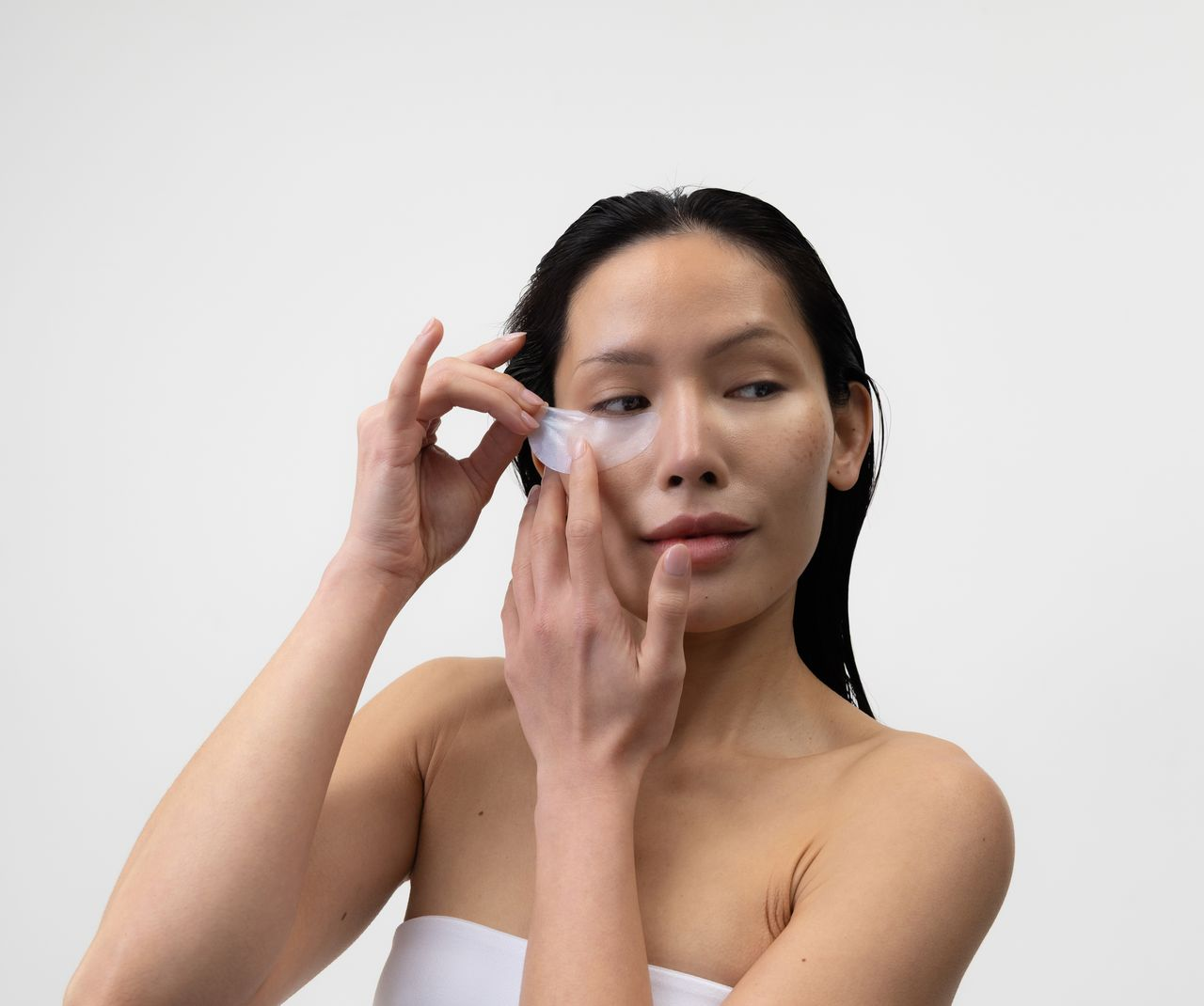
Why the Eye Area Needs a Targeted Approach
The skin around the orbital zone is biologically distinct from the rest of the face. It is significantly thinner, possesses far fewer oil glands, and is under constant micro-movement from blink dynamics and facial expressions.
Because of these structural factors, the eye area experiences specific visible shifts earlier than other zones:
- Accelerated Moisture Loss & Structural Decline: With age and decreased fibroblast function, structural collagen matrix synthesis slows naturally over time [1].
- Visible Micro-Tension: Constant facial expressions create fine lines and crow's feet along delicate skin contours.
- Environment, Sun & UV Vulnerability: Environmental exposure accounts for up to 80% of visible facial age-related changes, heavily affecting thin periorbital tissue [2].
Rather than applying a generic face serum, delicate periorbital skin benefits from dedicated, eye-specific active delivery.
Specific peptide technology for the eyes: What is Tetrapeptide-1?
At a plain-language level, peptides are short chains of amino acids: the fundamental building blocks of proteins. In cosmeceutical formulation, peptides act as familiar biological messengers that work seamlessly alongside the skin's natural systems.
Within Synergie Skin’s Clean Science® philosophy, peptides are prized as foundational, evidence-based actives. They offer precise, non-irritating support that respects skin integrity while optimising surface performance.
Tetrapeptide-1 is a specialised biomimetic peptide engineered specifically to support a visibly firmer, smoother, and more defined eye contour.
How Tetrapeptide-1 Works on Skin Appearance
Research into Tetrapeptide-1 highlights its ability to support the appearance of structural resilience around the eye area:
- Supports Firmer-Looking Skin: Tetrapeptide-1 helps the under-eye contour appear tighter and more defined.
- Softens Expression Lines: By supporting local skin resilience, it helps smooth the appearance of fine lines, crow's feet, and crepey texture caused by daily movement.
- Promotes a Refreshed Eye Contour: It supports a visibly lifted and revitalised look, helping fatigued under-eyes appear more rested.
Harnessing Tetrapeptide-1 in the ABCDZ Plus 1 Framework
At Synergie Skin, our formulation philosophy is anchored in the ABCDZ framework: core daily vitamins (A, B, C), microbiome support (D), and daily physical protection (Z).
Research has explored how topical application of retinoids, niacinamide, vitamin c derivatives and dermabiome supporting actives can improve the appearance of firmness, hydration and texture [3] while supporting cell turnover aids barrier resilience [4]. Tetrapeptide-1 sits perfectly as a "plus one" targeted active for the eye area. While your foundational vitamins support overall skin health across the face, a "plus one" treatment allows you to deliver specialised attention to localised concerns like periorbital fine lines, loss of firmness, reduced elasticity and fatigue.
Why Tetrapeptide-1 Was Chosen for EyeDration Biomask
To deliver active ingredients to delicate eye contours effectively, formulation format matters just as much as ingredient selection. This formulation rationale drove the creation of our advanced EyeDration Biomask.
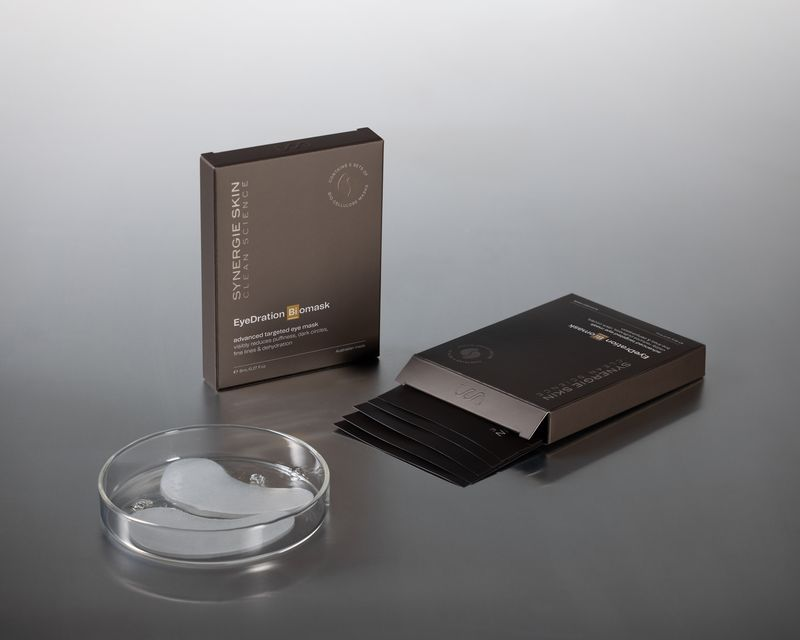
1. Biocellulose Nanofibre "Second Skin" Technology
Crafted from coconut-derived bio-cellulose, the mask creates a nanofibre micromesh network that conforms perfectly to the orbital contour. This close, continuous contact ensures optimal absorption and prevents active evaporation during wear.
2. Curated Ingredients
Tetrapeptide-1 is paired alongside complementary hero active ingredients:
- Caffeine: Helps visibly reduce the appearance of under-eye puffiness and brightens the look of dark shadows.
- Vegan Microalgal Biocomplex: A blend of vegan collagen amino acids and spermidine that deeply hydrates, smooths crepey texture, and supports the vulnerable skin barrier around the eye area[4]
How to Add a Targeted Eye Mask to Your Routine
Incorporating an intensive peptide-based eye treatment into your routine is simple and flexible:
- Cleanse: Begin with clean, dry skin.
- Position: Apply one EyeDration Biomask patch beneath each eye, aligning smoothly along the orbital contour. (remove the two surrounding layers)
- Activate: Leave on for 15–30 minutes to allow full nanofibre adherence and active absorption.
- Press: Remove patches and gently press the remaining active serum into the under-eye and upper orbital area. Do not rinse!
- Protect: Follow with your chosen eye cream or moisturiser.
Usage Tip: Use up to 4 times a week for ongoing pro-ageing support, or prior to special events for an instant, refreshed lift.
Embracing Pro-Ageing Care
At Synergie Skin, we champion pro-ageing over anti-ageing. Ageing is a true privilege, and our goal is never to resist the passage of time or chase unrealistic quick fixes. Instead, we formulate evidence-based solutions that support your skin’s natural resilience, empowering you to feel confident in a smooth, firm, and healthy-looking complexion at every stage of life.
Explore the new EyeDration Biomask or take our Skin Quiz to discover your ideal pro-ageing routine.
Scientific References
- Varani, J., M. K. Dame, L. Rittie, S. E. Fligiel, S. Kang, G. J. Fisher, and J. J. Voorhees. 2006. "Decreased Collagen Production in Chronologically Aged Skin: Roles of Age-Dependent Alteration in Fibroblast Function and Defective Mechanical Stimulation." The American Journal of Pathology 168 (6): 1861–1868. https://pmc.ncbi.nlm.nih.gov/articles/PMC1606623/.
- Flament, F., R. Bazin, S. Laquieze, V. Rubert, E. Simonpietri, and N. Piot. 2013. "Effect of the Sun on Visible Clinical Signs of Aging in Caucasian Skin." Clinical, Cosmetic and Investigational Dermatology 6: 221–232. https://pmc.ncbi.nlm.nih.gov/articles/PMC3790843/.
- Kafi, R., H. S. Kwak, W. E. Schumacher, S. Cho, V. N. Hanft, G. H. Hamilton, A. L. King, et al. 2007. "Improvement of Naturally Aged Skin With Vitamin A (Retinol)." Archives of Dermatology 143 (5): 606–612. https://pubmed.ncbi.nlm.nih.gov/17515510/.
- Woo, Y. R., and H. S. Kim. 2024. "Skin Microbiome, Pre/Postbiotics and Ageing Skin." Frontiers in Physiology 15: 10834687. https://pmc.ncbi.nlm.nih.gov/articles/PMC10834687/.
