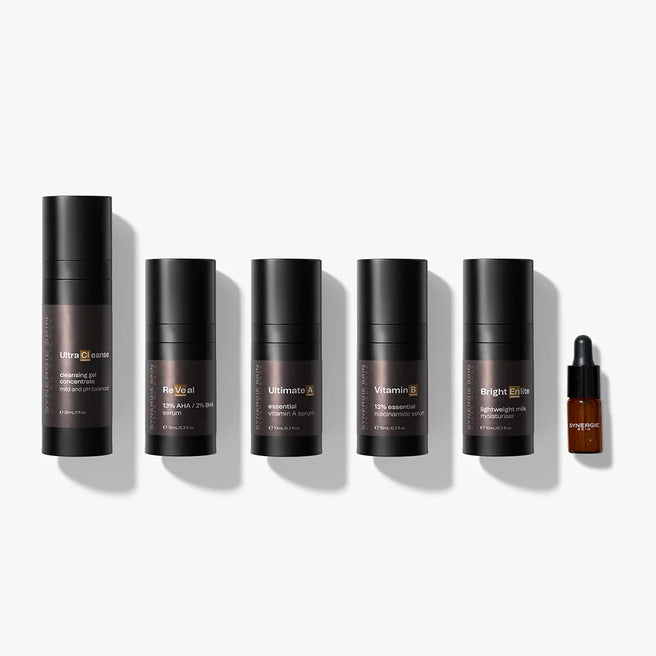
“Can skin be dry and oily at the same time?” is a question asked more often than you might think, and so you may be surprised to learn that, yes, it is common to have dry yet oily skin simultaneously.

Many oily skin types can produce oil from the pores yet experience dryness and irritation on the skin’s surface, which is a concern often referred to as combination skin. Dry, flaky skin has a variety of causes, including the overuse of high-concentration surface exfoliants. It is also fairly common to have ‘water dry’ or dehydrated skin, affecting all skin types where the surface can feel tight from lack of water.
At Synergie Skin, we believe in empowering you with the most current, science-backed information in order for you to make informed choices with regards to the health of your skin. So let’s unpack the unique challenges of dry and oily skin whilst offering guidance on building a targeted routine to restore balance to your complexion.
What are the symptoms of dry yet oily skin?
Here are some common signs that could indicate this unique combination skin type.
- Shiny T-zone with dry patches elsewhere
The forehead, nose and chin may appear greasy or shiny, while the cheeks or outer areas of the face feel tight, rough or visibly flaky.
- Flaky skin that still feels oily underneath
Flaking or peeling, especially around the nose or mouth, can occur even when the skin feels greasy to the touch, indicating dehydration rather than a lack of oil.
- Tightness after cleansing
The skin may feel tight or uncomfortable immediately after washing, a sign that the barrier has been stripped of water or essential lipids, even if oil resurfaces shortly after.
- Congested pores and occasional breakouts
The presence of blackheads, enlarged pores and breakouts, particularly in oil-prone areas, can occur alongside signs of dryness, as the skin attempts to compensate for water loss by producing more sebum (oil on the skin).
- Makeup that clings to dry patches but slides off oily areas
Foundation or tinted moisturisers may sit unevenly on the skin, gripping onto dry patches while breaking down quickly in oilier zones.
Why is my oily skin suddenly dry and flaky?
This sudden change in skin behaviour can be triggered by a range of internal and external factors:
- Overcleansing or overexfoliating
Using harsh cleansers or frequent exfoliants can strip away protective oils, leaving your skin vulnerable to moisture loss and inflammation.
- Dehydration
Even oily skin needs water. A lack of internal hydration or inadequate topical humectants can lead to tightness, flaking, roughness and impaired skin function.
- Harsh active ingredients
Potent active ingredients such as retinoids or high-strength alpha hydroxy acids (AHAs) can disrupt the skin barrier if used too frequently or without adequate hydration support.
- Environmental factors
Exposure to dry climates, air conditioning, wind, or prolonged sun exposure can all draw moisture out of the skin and trigger compensatory oil production.
- Compromised skin barrier
When the skin’s natural lipid barrier is damaged, the skin struggles to retain water, leading to both dryness and excessive oiliness.

How to treat dry and oily skin
Managing a combination skin type comes down to restoring moisture and controlling excess shine without overcorrecting in either direction. Below is a brief handbook to restore the balance:
1. Choose the right cleanser
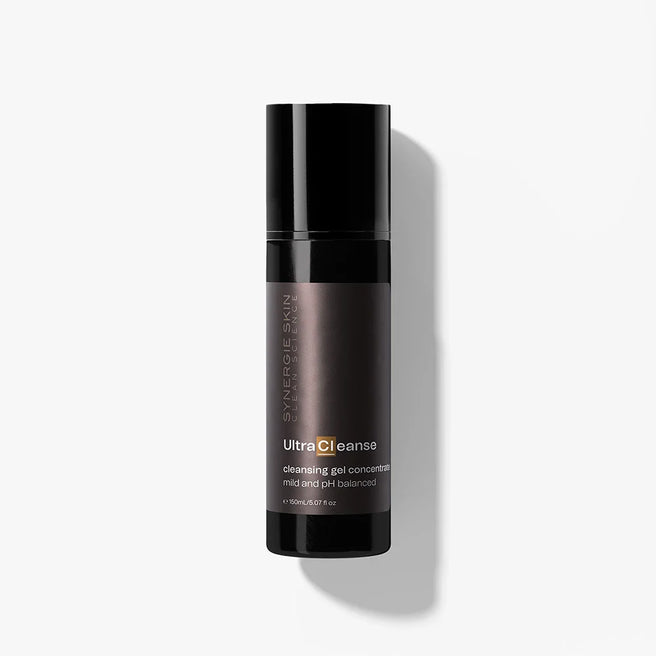
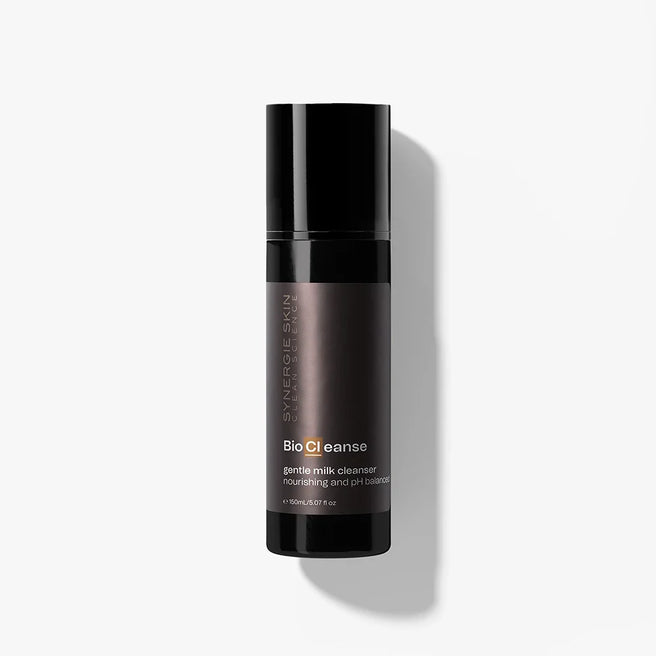
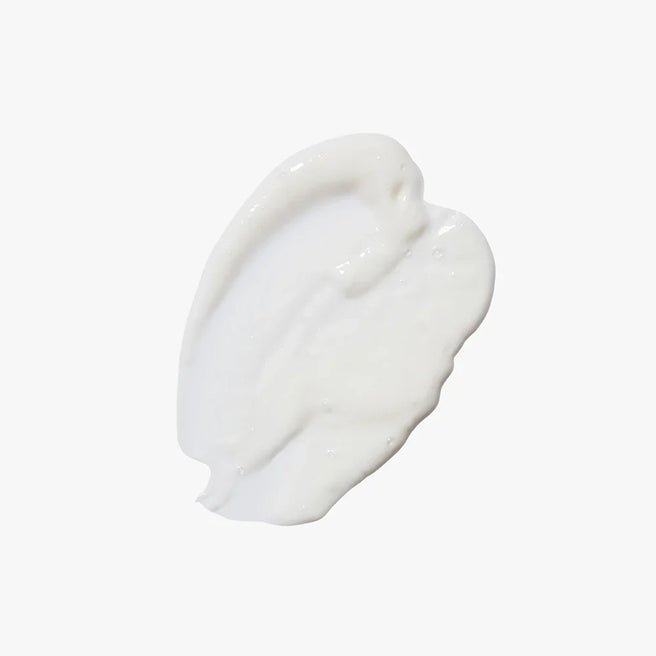
Many foaming cleansers are formulated with common surfactant chemicals such as Sodium Lauryl Sulphate, Sodium Laureth Sulphate, or Ammonium Laureth Sulphate. These are harsh foaming ingredients and may strip the skin of essential moisture levels. Instead, seek out a gentle, sulphate-free cleanser to remove oil without stripping hydration. Products like UltraCleanse and BioCleanse are great options that won’t over-cleanse your skin. On this note, it is important to understand that cleansing twice a day is sufficient for oily skin, and we advise that you avoid using bar soaps to cleanse the face, as their high alkalinity can disrupt the skin’s natural acid mantle, leading to dehydration and flakiness.
2. Choose the right moisturiser
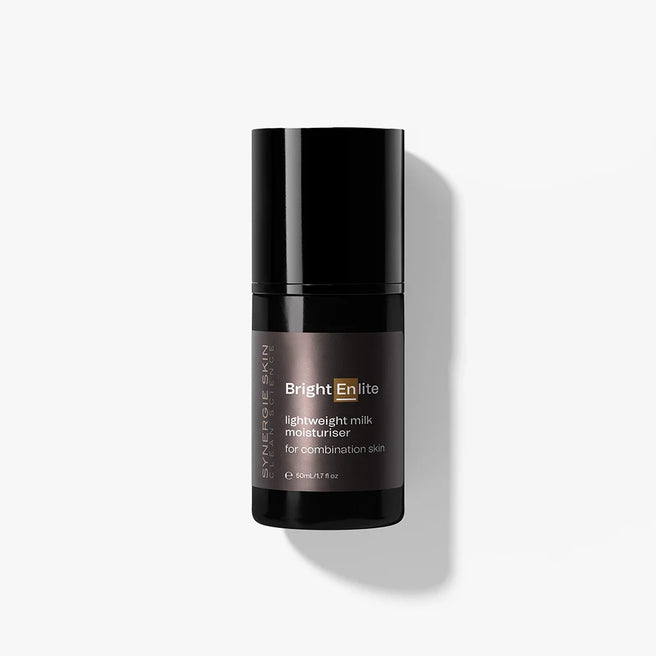
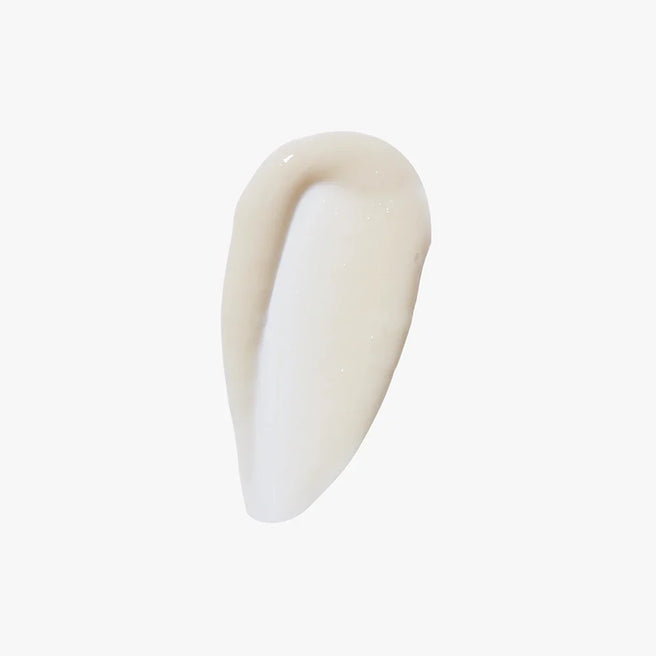
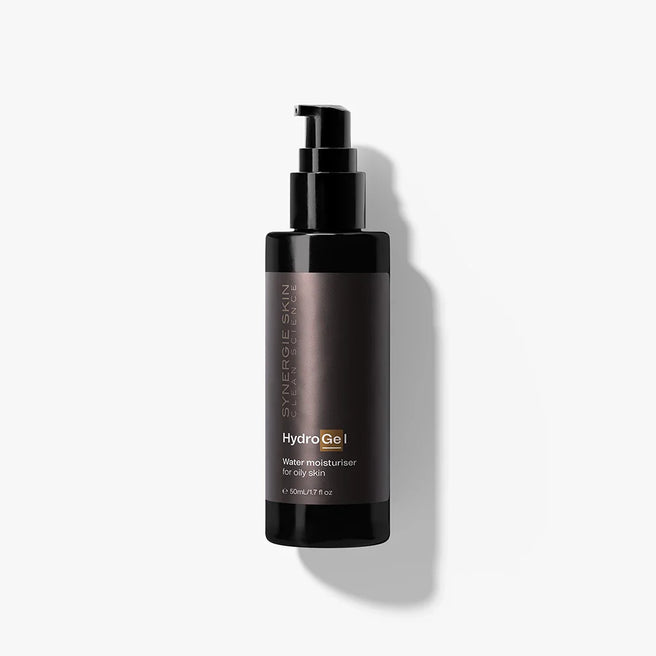
All skin types, including oily skin, require hydration. Whilst moisturisers with high oil content can cause pore-blockage and breakouts, you should never leave your skin surface dry and unmoisturised. We recommend BrightEnlite, our lightweight milk moisturiser, or HydroGel as an oil-free alternative. BrightEnlite is packed with anti-ageing and pore-minimising extracts which address unwanted oil and shine. If you have pigmentation, oily or combination skin, this moisturiser is made for you.
3. Avoid harsh ingredients
While ingredients such as benzoyl peroxide may help reduce acne bacteria in oily skin, they are also harsh oxidants that can strip the skin of its natural moisture levels. Gentler alternatives like lactic acid and salicylic acid help to exfoliate surface dry skin and clear clogged pores whilst also increasing moisture levels and calming inflammation.
4. Hydrate from the inside
It’s just as important to remain hydrated from the inside, particularly in our harsh Australian summer climate. If you don’t love plain water, add fresh lemon or lime juice with a little Natvia or stevia, a natural sweetener. Adding a dash of liquid chlorophyll will also help reduce the acidity level in your blood, which may improve overall skin health. So remember to keep your body well-watered during summer, no matter what your skin type!
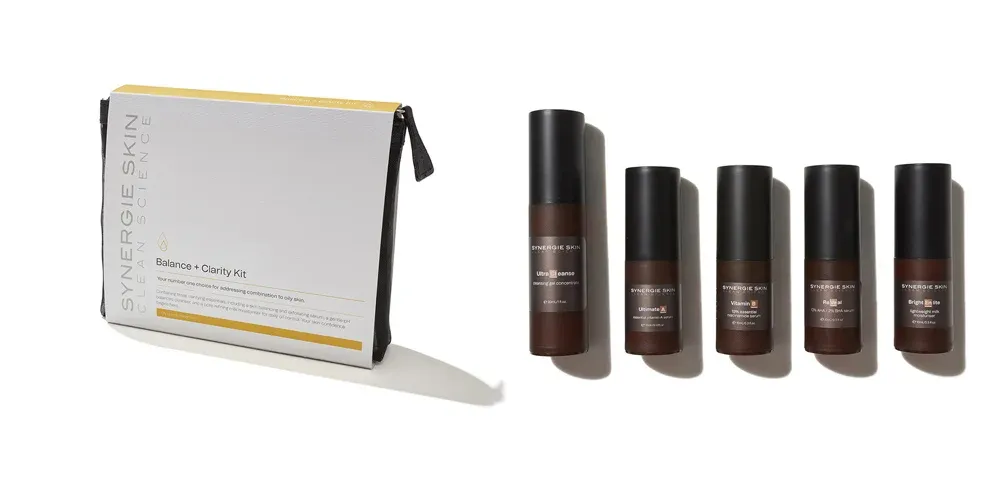
The routine:
A consistent, targeted routine is essential for restoring balance to skin that is both oily and dehydrated. The focus should be on hydration, barrier support, and oil regulation.
Day
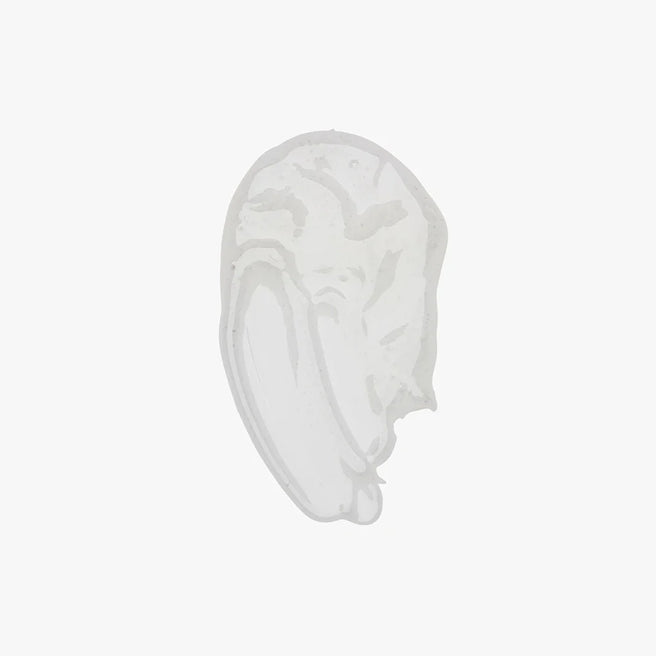
- UltraCleanse — This cleansing gel concentrate eliminates excess oil and overnight impurities without drying the skin.
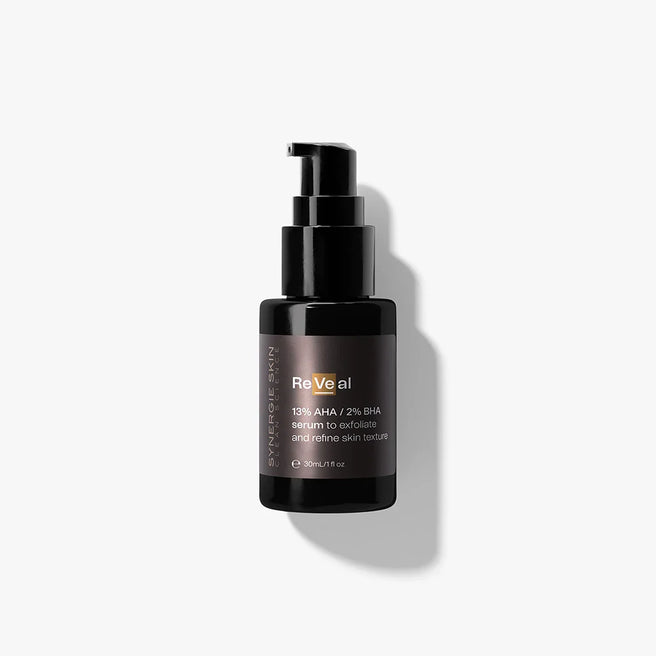
- ReVeal — An exfoliating serum to improve skin tone and promote smoother, hydrated skin.
- BrightEnlite — This brightening and pore refining milk moisturiser helps reduce unwanted shine whilst improving overall skin texture and clarity.
Night
- UltraCleanse — A second cleanse in the evening removes sunscreen, makeup, environmental debris and other impurities, prepping the skin for active ingredients without disturbing the skin’s natural balance.
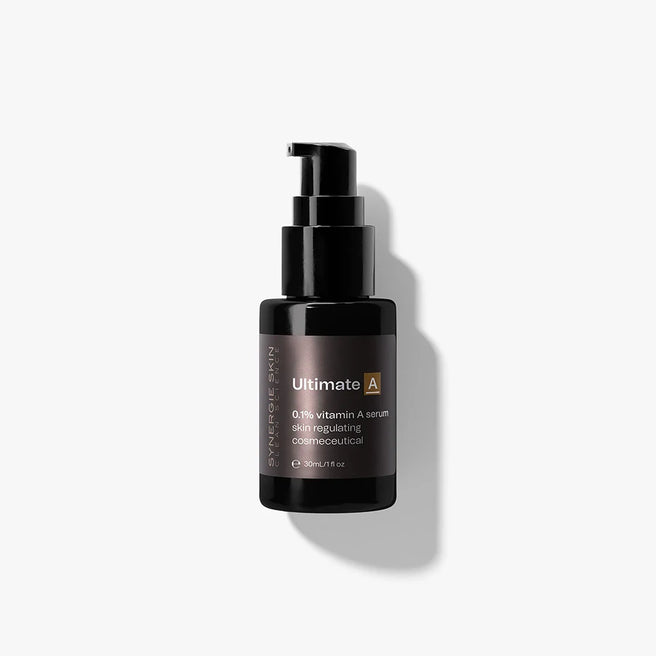
- Ultimate A — This essential vitamin A serum is designed to regulate cell renewal, reduce sun damage, and minimise breakouts and congestion.
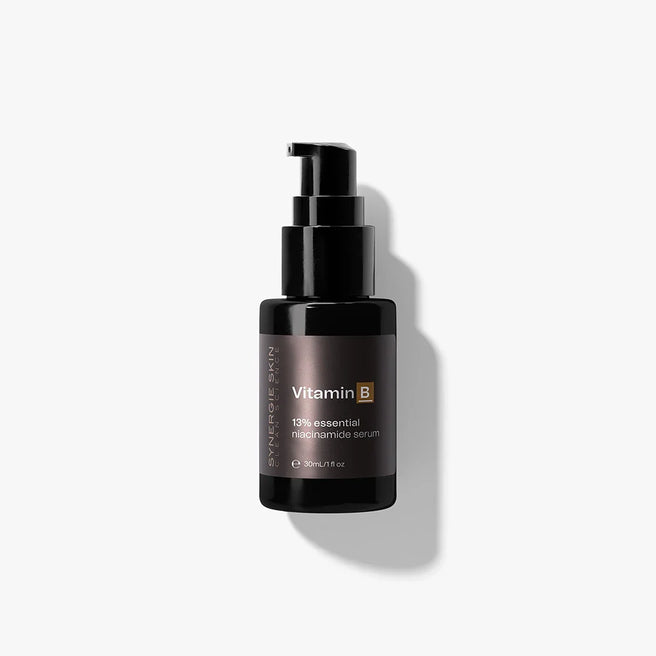
- Vitamin B — An essential multitasking serum designed to rejuvenate and strengthen the skin.
- BrightEnlite — This brightening and pore-refining milk moisturiser reduces excess oil flow and restores moisture.
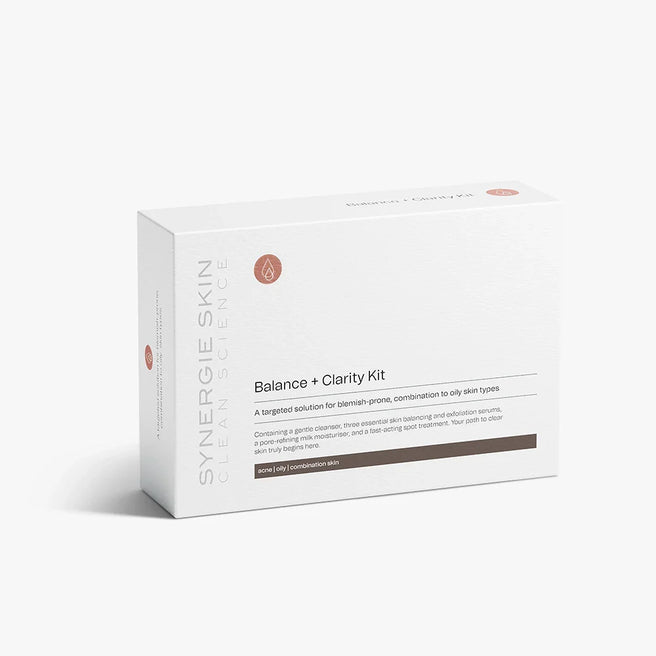
You can try the above products as part of our Balance + Clarity Kit, which is the perfect introduction to Synergie skincare for combination skin types.
Shop Synergie Skin products for dry yet oily skin
Elevate your complexion with Synergie Skin’s expertly formulated products powered by potent, evidence-based ingredients. Designed to suit a wide range of skin types, from dry to oily and combination, each formula prioritises optimal performance while supporting skin integrity.
Get started by taking our Skin Quiz for personalised product recommendations.
Prefer a one-on-one approach? Book a consultation with a Synergie Skin expert for tailored guidance.
FAQs
Can you have dry and oily skin at the same time?
Yes, it’s entirely possible. When the skin lacks moisture, it often compensates by producing excess sebum (oil produced by the skin), leaving the complexion feeling both greasy yet tight.
What causes dry yet oily skin?
This condition is often the result of dehydration, overuse of active ingredients, environmental stress or disruption to the skin’s barrier. These factors can reduce water content in the skin whilst oil production continues unchecked.
How to take care of dry and oily skin daily?
Anchor your routine in gentle, consistent care. Think mild cleansers, non-comedogenic moisturisers and targeted serums that fine-tune oil flow while replenishing lost hydration.
Is dehydrated skin the same as dry skin?
No, they aren't the same. While they feel similar, the key difference is what your skin is missing: dry skin lacks oil, while dehydrated skin lacks water.
Which ingredients should I avoid if my skin is oily but flaky?
Avoid harsh astringents, drying alcohols and overly strong actives such as undiluted AHAs or benzoyl peroxide. Instead, look for humectants, barrier-supporting ingredients and gentle exfoliants like lactic acid or salicylic acid.